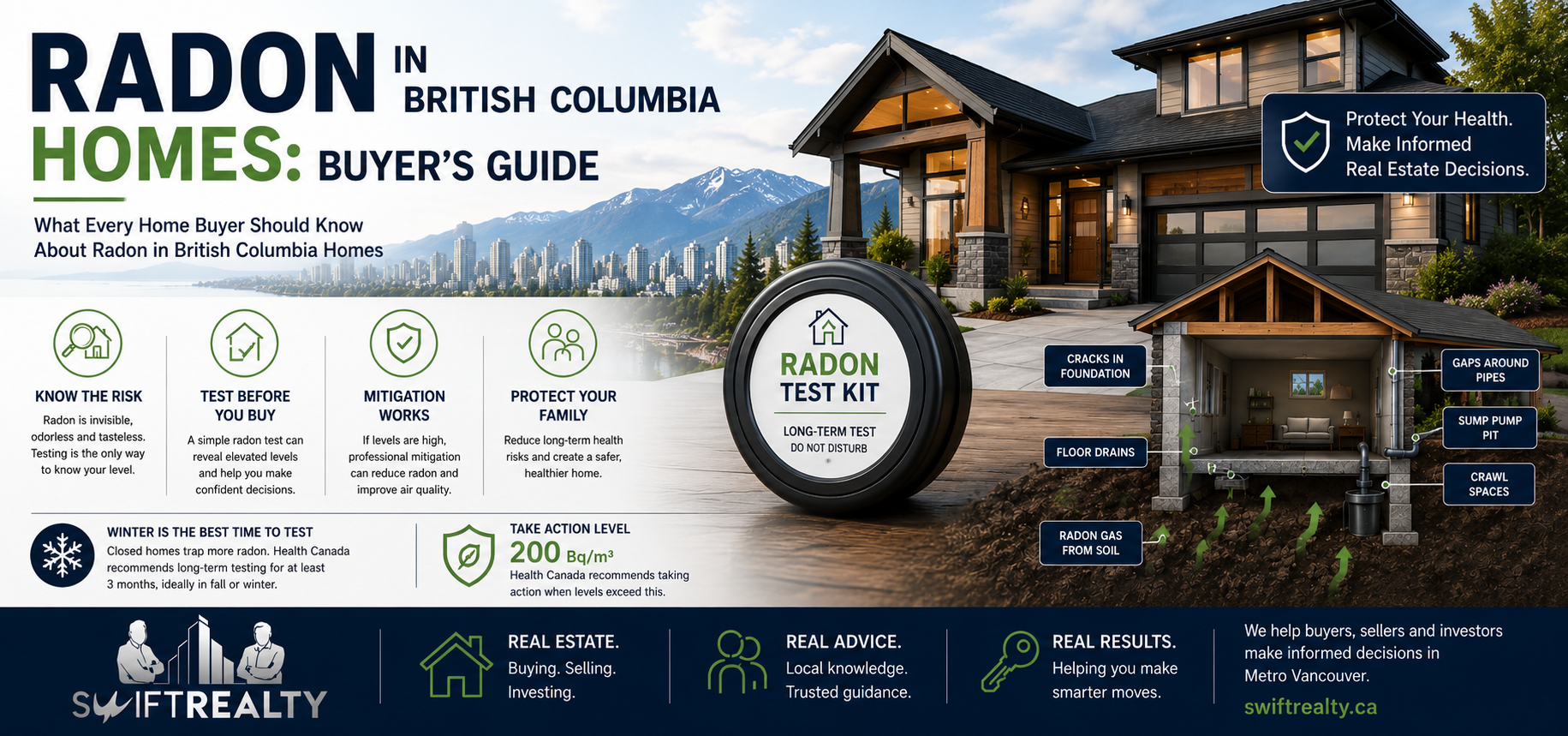
What Every Home Buyer Should Know About Radon in British Columbia Homes
TL;DR: Radon is an invisible gas that can enter B.C. homes through foundations, crawl spaces, sump systems, and gaps around pipes. Buyers and sellers should understand radon testing, especially for homes with basements, ground-level suites, crawl spaces, or older construction.
If you are planning to buy a home in British Columbia, one important issue that is often overlooked during the home-buying process is radon.
Radon is invisible, odourless, and tasteless, which means you cannot detect it without proper testing. For buyers, sellers, and investors, radon awareness can be an important part of understanding a property's condition before making a decision.
What Is Radon?
Radon is a naturally occurring radioactive gas that forms from the breakdown of uranium in soil and rock.
It can enter a property through:
Basement foundation cracks
Crawl spaces
Floor drains
Sump pump pits
Gaps around plumbing pipes
Once trapped indoors, radon can build up to unsafe levels. Health Canada states that long-term exposure to high radon levels can increase the risk of lung cancer.
Why Radon Matters For Home Buyers And Sellers
Radon testing is becoming an important part of the real estate conversation in British Columbia, especially for properties where air moves up from the ground into the living space.
This can include:
Homes with basements
Ground-level suites
Older homes
Investment properties
Rental properties
Many buyers are paying closer attention to indoor air quality, home inspections, and environmental concerns during the purchase process.
Is Radon Common In British Columbia?
Some areas of British Columbia may have higher radon levels due to local geology, soil conditions, and terrain. Even neighbouring homes can have very different radon readings.
Radon testing may be especially relevant in areas such as:
North Vancouver
Burnaby
Coquitlam
Vancouver
For buyers purchasing detached homes, townhomes, or properties with basement suites, radon awareness is especially important.
Is Winter The Best Time To Test For Radon?
Yes, winter is often considered one of the best times to test for radon in a home.
During colder months:
Windows and doors are closed more often
Homes have less natural ventilation
Heating systems can create a stack effect that pulls radon gas from the soil into the home
Because of this, radon levels may become more concentrated indoors during winter, especially in basements, ground-floor units, homes with crawl spaces, and properties with sump pumps.
Health Canada recommends a long-term radon test for at least three months, ideally during the fall or winter.
How Is Radon Tested During A Real Estate Transaction?
A radon test is the only reliable way to determine whether a property has elevated radon levels.
Common testing methods include:
Long-term radon testing
Short-term radon testing
Professional indoor air quality inspections
Health Canada recommends taking action when radon levels exceed 200 Bq/m3.
Many home buyers now ask about:
Previous radon testing reports
Radon mitigation systems
Indoor air quality
Basement ventilation systems
Tips For Accurate Winter Radon Testing
For more reliable results during winter testing:
Keep windows and exterior doors closed as much as possible
Maintain normal heating conditions
Place the test in the lowest lived-in area of the home
Avoid placing the test near vents, windows, or bathrooms
Long-term testing between 3 and 12 months is generally considered more accurate because radon levels can fluctuate throughout the year.
What Is A Radon Mitigation System?
If elevated radon levels are found, a professional radon mitigation contractor can often reduce them significantly.
Common mitigation solutions include:
Sub-slab depressurization systems
Ventilation improvements
Sealing foundation cracks
Sealed sump pump systems
Most mitigation systems are designed to reduce radon levels and improve indoor air quality. Buyers should ask whether any existing system was professionally installed and whether follow-up testing has been completed.
Radon And Home Inspections In British Columbia
For real estate agents, radon education is becoming part of modern buyer representation and due diligence.
When purchasing a home in British Columbia, buyers should consider:
Including a home inspection condition
Asking about previous radon testing
Reviewing basement moisture and ventilation
Inspecting sump pump systems and crawl spaces
Sellers may also benefit from proactively testing their property before listing, especially if the home has a basement, crawl space, or ground-level living area.
What Buyers And Sellers Should Do Next
Whether you are buying, selling, or investing in real estate in British Columbia, understanding radon is an important part of protecting your health and making informed property decisions.
As the real estate market becomes more informed about indoor air quality and environmental safety, radon testing may become a valuable step during the home-buying process.
If you are looking to buy or sell a home in Metro Vancouver, Swift Realty can help you think through home inspections, investment properties, and property management considerations before your next move.




Responses