Musqueam Agreement Explained: What It Means for Property Owners, Land Value, and Development
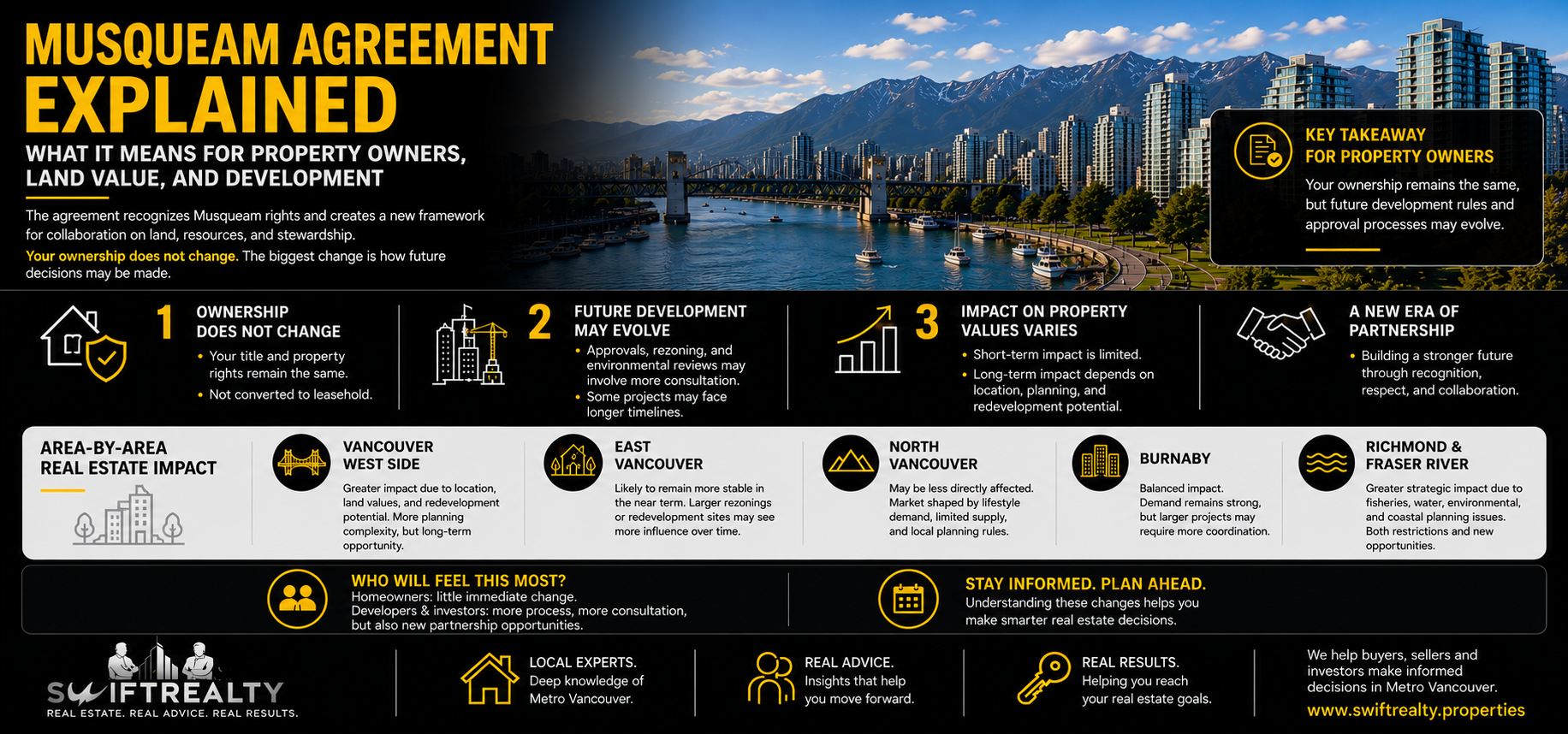
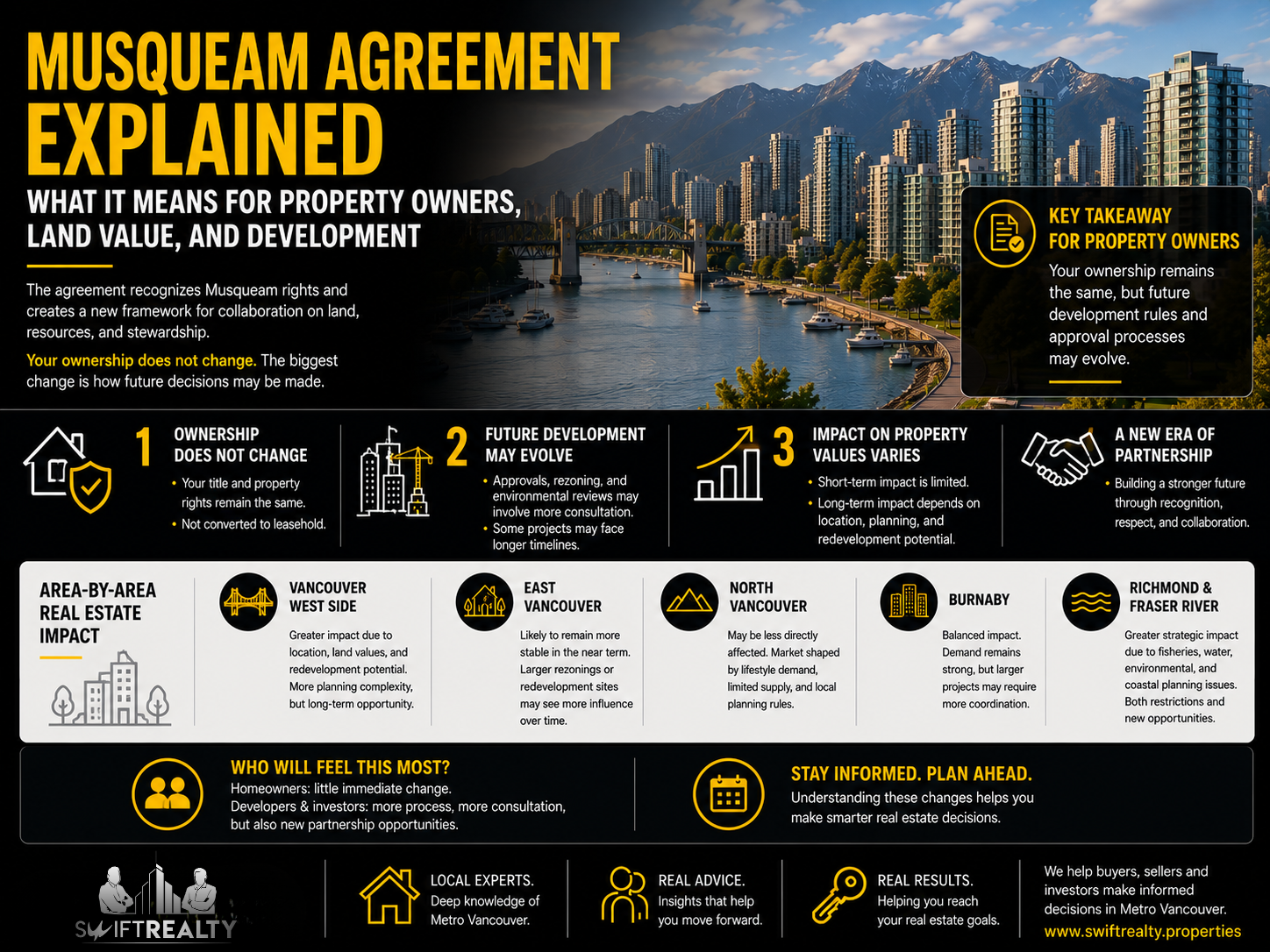
TL;DR: The Musqueam agreement does not change private freehold ownership, but it may affect how future land use, development, and environmental decisions are made. For Vancouver property owners, the main issue is not ownership changing today, but how future development approvals may evolve.
A recent agreement between the Government of Canada and the Musqueam Indian Band marks an important shift in how land, resources, and stewardship are discussed across Musqueam traditional territory.
For many Vancouver property owners, the immediate question is simple: Does this affect my home, my title, or my land value?
The short answer is no, your private ownership does not change. The bigger change concerns future governance, consultation, and decision-making on development.
What Was Agreed?
The agreement formally recognizes Musqueam Aboriginal rights and title across their traditional territory and creates a longer-term framework for collaboration between Musqueam and the federal government.
It also supports shared work around land, fisheries, marine management, and environmental stewardship. The Government of Canada described the agreements as a step in the nation-to-nation relationship with Musqueam.
In simple terms, this is a shift away from government-only decision-making and toward more shared governance with First Nations.
Which Areas Are Affected?
Musqueam traditional territory includes large parts of Metro Vancouver, including Vancouver, Burnaby, Richmond, areas around the Fraser River, and coastal areas.
This is why the agreement is getting so much attention. It relates to some of the most valuable and active real estate areas in Canada.
For property owners, the impact will depend heavily on location, property type, and whether the land has redevelopment potential.
Does This Change Freehold Ownership?
No. Freehold ownership is not converted to leasehold ownership by this agreement.
If you own freehold property:
- Your title remains the same
- Your property does not convert to leasehold
- You do not start paying lease payments
- This is not the same as UBC or other leasehold developments
The federal government has stated that the agreements do not affect privately owned land, and Musqueam has also said its approach is based on partnership rather than taking private property.
What Actually Changes?
The biggest change is not ownership. It is how land may be governed and developed over time.
Before, the government had more direct control over many land use decisions. Now, Musqueam will have a stronger role in conversations around land, resources, stewardship, and future development.
This may affect:
- Development approvals
- Rezoning processes
- Environmental review
- Waterfront and river-related planning
- Large redevelopment projects
For most homeowners, this does not create an immediate change in day-to-day life.
Will This Affect Property Values?
In the short term, most homeowners should not expect a major immediate change. Ownership, financing, and buyer demand are not automatically affected by the agreement.
In the medium term, the impact may be mixed. Some development sites may face more consultation, more process, or longer timelines. That can create uncertainty for developers.
At the same time, some properties may benefit from better planning, Indigenous partnerships, higher-density opportunities, or more structured redevelopment frameworks.
Over the long term, the effect may be positive in areas where clearer collaboration leads to better planning and stronger development opportunities.
Area-By-Area Real Estate Impact
Vancouver West Side
The West Side may experience a greater impact due to its location, land values, and redevelopment potential. This could create more planning complexity, but also a long-term opportunity.
East Vancouver
East Vancouver is likely to remain more stable in the near term. Larger rezonings or redevelopment sites may see more influence over time.
North Vancouver
North Vancouver may be less directly affected by this specific agreement. Its market will likely continue to be shaped by lifestyle demand, limited supply, and local planning rules.
Burnaby
Burnaby may see a balanced impact. Demand remains strong, but larger development projects may require more coordination.
Richmond and the Fraser River
Richmond and the Fraser River areas may see greater strategic impact due to fisheries, water, environmental, and coastal planning issues. This could create both restrictions and new opportunities.
Who Will Feel This Most?
Homeowners will likely see little immediate change. The longer-term impact depends on whether their property has redevelopment value.
Developers and investors may feel the effect sooner. Large projects may need more consultation and coordination, but they may also create new partnership opportunities.
Governments will also need to collaborate more closely with First Nations rather than making decisions independently.
The Key Takeaway For Property Owners
This agreement is not about changing private homes from freehold to leasehold. It is about recognizing Musqueam rights and creating a more collaborative approach to land and resource decisions.
For property owners, the practical takeaway is this: your ownership remains the same, but future development rules and approval processes may evolve.
What This Means For Your Next Real Estate Decision
Vancouver real estate is not becoming less valuable overnight. It is becoming more complex, more strategic, and more closely tied to long-term planning.
If you own property in an area with redevelopment potential, it may be worth watching how policies, partnerships, and approvals develop over time.
For buyers, sellers, and investors, Swift Realty can help you think through how location, land use, and market timing may affect your next decision.

Responses