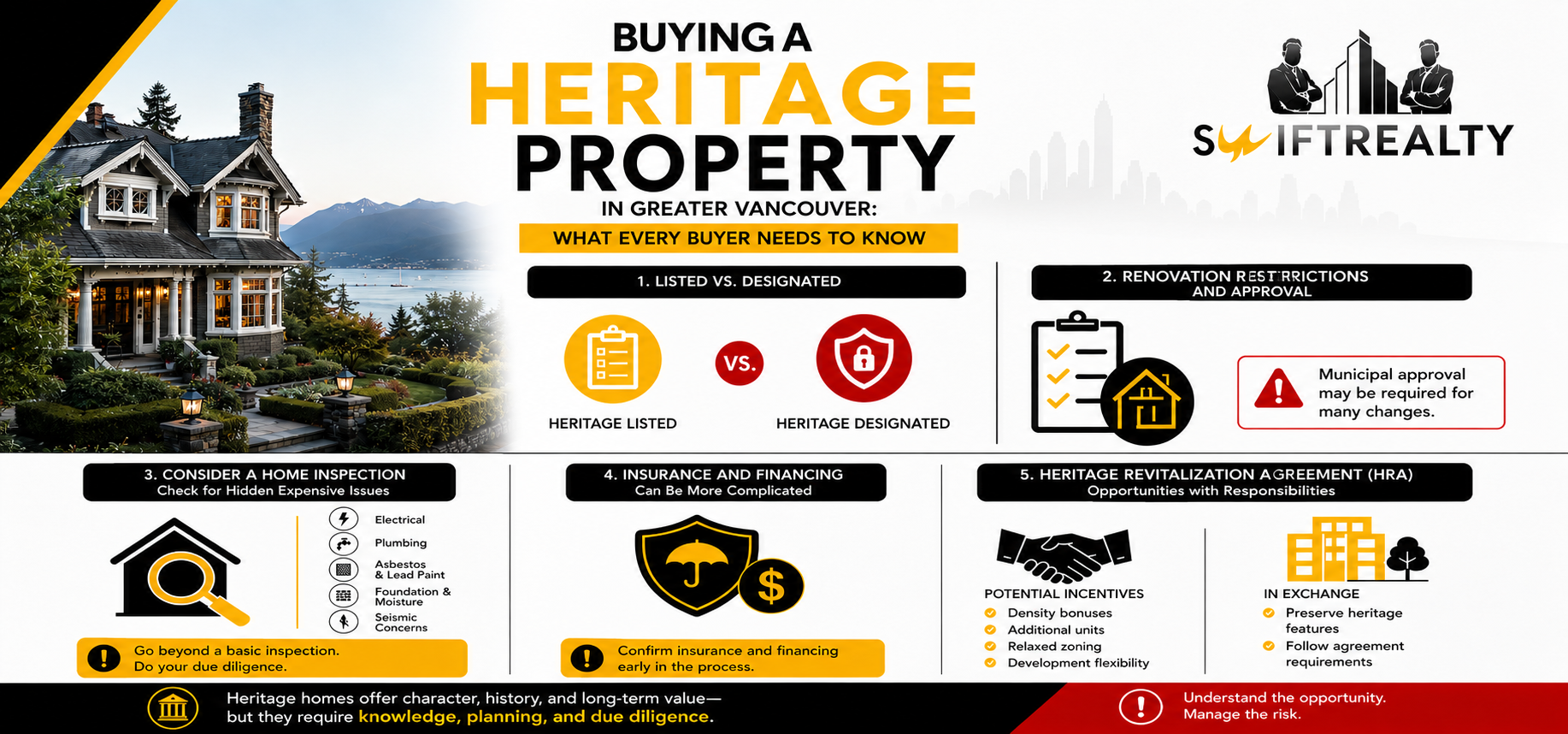
Buying a Heritage Property in Greater Vancouver: What Every Buyer Needs to Know
TL;DR: Buying a heritage property in Greater Vancouver can offer character, scarcity, and long-term appeal, but it also comes with extra due diligence. Buyers should review heritage status, renovation limits, insurance, financing, and inspection risks before making an offer.
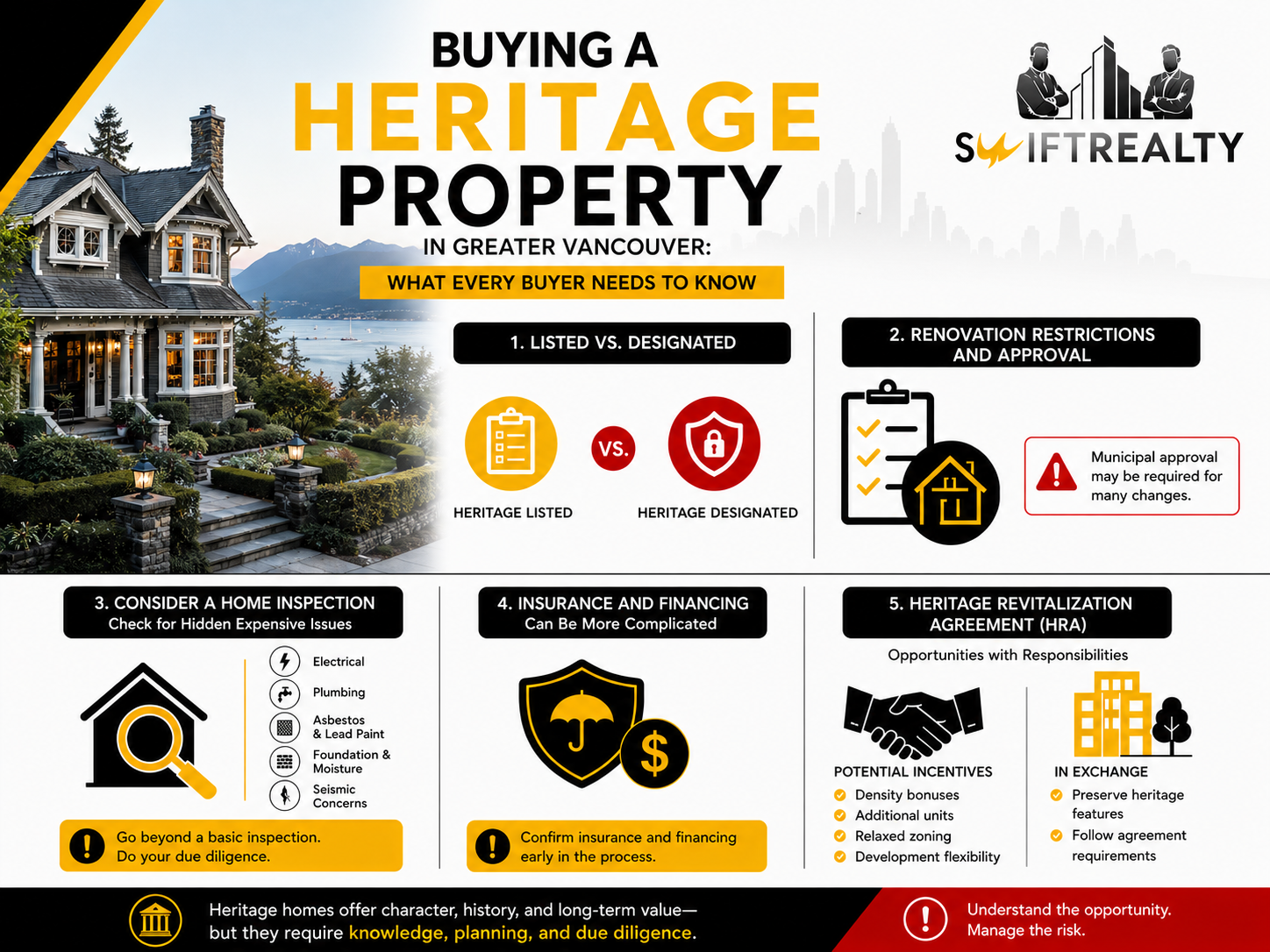
Greater Vancouver is home to some of the most beautiful and historically significant residential properties in Canada. From character homes in Vancouver and New Westminster to older estates in West Vancouver, heritage properties can offer architectural charm, craftsmanship, and long-term uniqueness that modern construction often cannot replicate.
But buying a heritage home is very different from purchasing a typical residential property.
Many buyers are drawn to original millwork, stained glass windows, hardwood flooring, and historic character. What they may not fully understand are the financial, legal, insurance, and renovation challenges that can come with owning one of these homes.
What Is Considered A Heritage Property?
A heritage property is typically a home or building recognized for its historical, architectural, or cultural significance.
In Greater Vancouver, heritage properties may include:
- Municipally listed heritage properties
- Heritage-designated properties
- Properties protected through a Heritage Revitalization Agreement
- Character homes located within heritage conservation areas
One of the most important things buyers must understand is that "heritage listed" and "heritage designated" are not the same.
Heritage Listed Vs. Heritage Designated
A listed property appears on a municipal heritage register because it has heritage value. Listing alone may not fully restrict future changes or redevelopment.
A designated heritage property has stronger legal protection under municipal bylaws or provincial legislation. Renovations, demolition, exterior modifications, and redevelopment opportunities may be more restricted.
Before purchasing any heritage property, buyers should confirm:
- Whether the property is listed or designated
- Whether there is a Heritage Revitalization Agreement
- What restrictions apply to renovations or redevelopment
- Whether density bonuses or incentives exist
Renovations May Be More Complicated
One of the most common surprises for buyers is how difficult renovations can become.
Depending on the heritage status, owners may require municipal approval for:
- Exterior modifications
- Window replacements
- Roof changes
- Structural upgrades
- Additions
- Demolition
- Landscaping changes
- Exterior paint colours in some cases
Even simple upgrades may involve heritage consultants, architectural reviews, longer permit timelines, and higher construction costs.
Older Homes Can Hide Expensive Issues
Many heritage homes in Greater Vancouver were built before modern building standards.
Common issues can include:
- Knob-and-tube wiring
- Aluminum wiring
- Galvanized plumbing
- Asbestos
- Lead paint
- Poor insulation
- Aging foundations
- Drain tile problems
- Moisture intrusion
- Seismic concerns
Because of Vancouver's climate and seismic risk, buyers should consider a home inspection beyond a basic one.
A stronger due diligence process may include an electrical inspection, sewer scope, oil tank scan, structural review, drainage assessment, and permit history review.
Insurance And Financing Need Early Attention
Insurance for heritage homes can be more complicated.
Some insurers may charge higher premiums, require upgrades before issuing coverage, limit replacement cost coverage, or decline coverage for homes with outdated systems.
Financing can also be more difficult when the property is in poor condition, has legal restrictions, needs major upgrades, or raises concerns about rebuild costs.
This is why buyers should confirm insurance and financing during the subject period, before becoming fully committed.
What Is A Heritage Revitalization Agreement?
A Heritage Revitalization Agreement, often called an HRA, is a legal agreement between a property owner and a municipality.
An HRA may provide incentives such as:
- Density bonuses
- Additional units
- Relaxed zoning
- Stratification opportunities
- Development flexibility
In exchange, the owner agrees to preserve and maintain the property's heritage features.
HRAs can create opportunities for investors and multi-generational families, but they also add legal and planning complexity.
Why Buyers Still Love Heritage Homes
Despite the challenges, heritage homes remain desirable in many Greater Vancouver neighbourhoods.
Buyers are often drawn to:
- Architectural uniqueness
- Larger lot sizes
- Mature neighbourhoods
- Character craftsmanship
- Historical significance
- Long-term scarcity value
- Strong emotional appeal
Areas such as Shaughnessy, Kerrisdale, Mount Pleasant, Grandview-Woodland, Queens Park, Dundarave, and Lower Lonsdale may continue to attract buyers who value character and location.
Questions To Ask Before Making An Offer
Before purchasing a heritage property, buyers should ask:
- Is the property listed or designated?
- Are there heritage alteration permits on file?
- Is there an HRA registered on the title?
- Are there zoning relaxations or density incentives?
- What renovations were completed with permits?
- Are there outstanding municipal orders?
- Has the property undergone seismic upgrades?
- What are the expected insurance costs?
- What future redevelopment restrictions exist?
These questions can help buyers understand both the opportunity and the risk.
What Buyers Should Do Next
Buying a heritage property in Greater Vancouver can be rewarding, but it requires a different level of due diligence than a standard residential purchase.
The right property can offer character, long-term desirability, architectural significance, and investment potential. At the same time, buyers should understand renovation restrictions, maintenance obligations, financing issues, insurance challenges, and municipal heritage rules.
If you are considering a heritage home, Swift Realty can help you review the property, understand market fit, and plan your next steps before making an offer.

Responses