BC Strata Depreciation Reports and Contingency Reserve Funds: What Every Condo Buyer Should Know
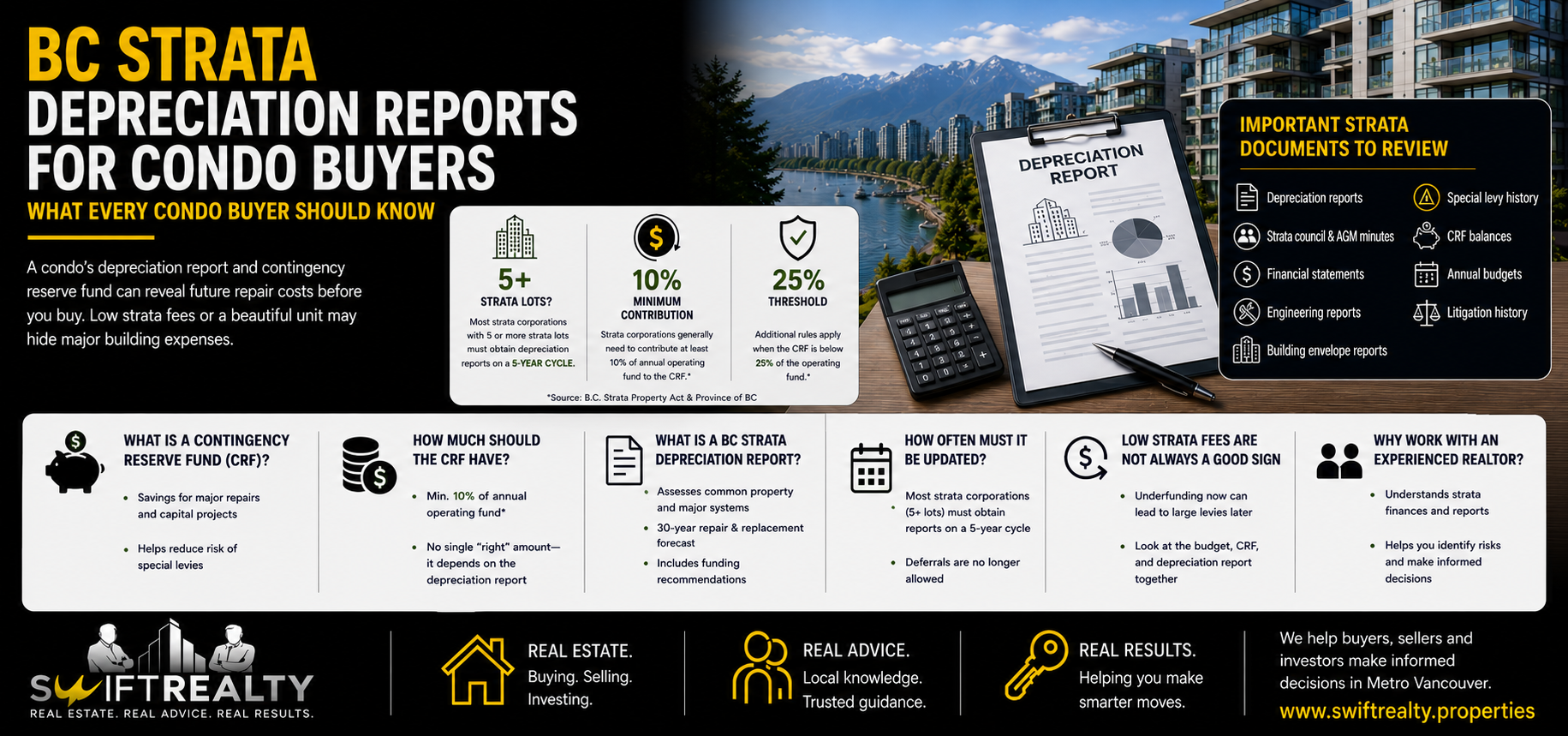
TL;DR: A condo's depreciation report and contingency reserve fund can reveal future repair costs before you buy. Buyers should review these documents carefully because low strata fees or a nice unit may hide major building expenses.
When purchasing a condo in Vancouver, North Vancouver, West Vancouver, Burnaby, Coquitlam, Port Moody, or Langley, understanding the strata corporation's financial health is just as important as evaluating the unit itself.
Many buyers focus on layout, location, views, and amenities but overlook depreciation reports, details of the contingency reserve fund, and other strata documents. These documents can reveal future costs that may affect your budget and investment.
What Is A Contingency Reserve Fund?
The Contingency Reserve Fund, often called the CRF, is the strata corporation's savings account for major repairs and capital projects.
It is designed to help pay for expenses that do not happen every year, such as:
- Roof replacement
- Building envelope repairs
- Elevator upgrades
- Plumbing replacement
- Parkade membrane repairs
- Window replacement
- Mechanical system upgrades
A healthy CRF can reduce the risk of sudden special levies and provide owners with greater financial stability.
How Much Should A Strata Reserve Fund Have?
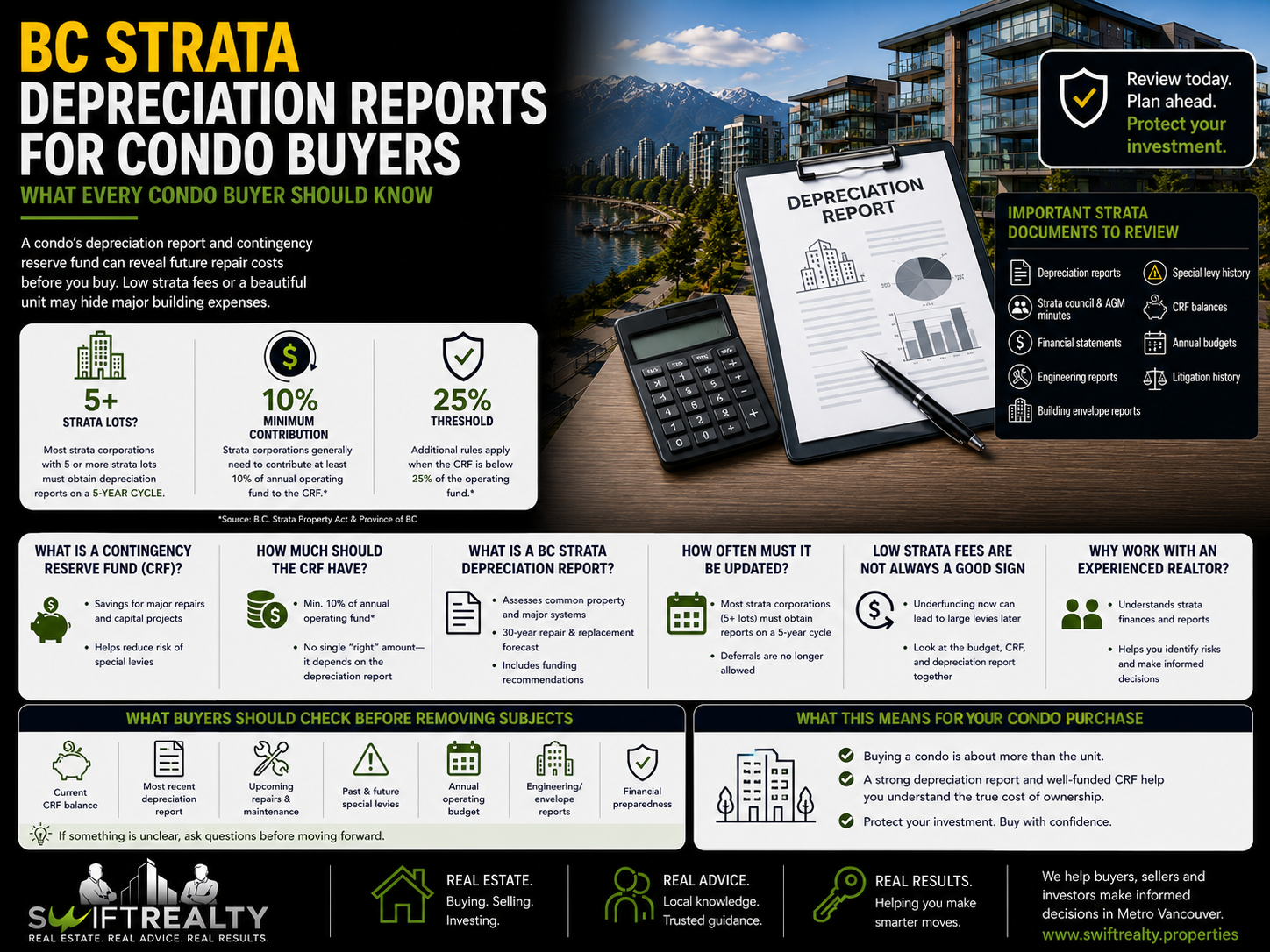
Under B.C. strata rules, strata corporations generally need to contribute at least 10% of their annual operating fund to the CRF unless certain exceptions apply. The Province also explains that additional contribution rules can apply when the CRF is below 25% of the operating fund.
But there is no single dollar amount that automatically means a reserve fund is healthy.
A newer building may not need the same reserve balance as an older building with upcoming roof, plumbing, elevator, or envelope repairs.
The better question is: Does the contingency reserve fund match the needs shown in the depreciation report?
What Is A BC Strata Depreciation Report?
A depreciation report is a professional assessment of common property and major building systems.
It usually reviews future repair and replacement needs over a 30-year period, including:
- Building envelope
- Roof systems
- Windows and doors
- Elevators
- Plumbing infrastructure
- Mechanical systems
- Fire protection systems
- Parkades
- Common amenities
The report also gives funding recommendations so owners can understand whether the strata is saving enough for future work.
For condo buyers, the depreciation report is one of the most important documents to review before removing subjects.
How Often Must A Depreciation Report Be Updated?
B.C. changed its strata depreciation report rules in recent years.
Most strata corporations with five or more strata lots must now obtain depreciation reports on a five-year cycle, and the previous ability to keep deferring reports has largely been removed. The Province says these requirements are meant to help strata corporations plan for long-term repair and maintenance needs.
This matters for buyers because older or missing reports can make it harder to understand upcoming costs.
Why Buyers Should Review Strata Documents Carefully
One of the biggest risks when buying a condo is failing to properly review the strata documentation.
Important documents may include:
- Depreciation reports
- Strata council meeting minutes
- AGM minutes
- Financial statements
- Engineering reports
- Building envelope reports
- Special levy history
- CRF balances
- Annual budgets
These documents often reveal issues that are not visible during a showing.
Examples include upcoming roof replacement, building envelope problems, elevator modernization, plumbing replacement, pending special levies, or litigation involving the strata corporation.
Low Strata Fees Are Not Always A Good Sign
Many buyers like the idea of low strata fees, but low fees are not always positive.
If a building is underfunding maintenance, owners may face special levies later. A condo with slightly higher monthly strata fees may be in a stronger position if the building is properly funding future repairs.
The key is not whether fees are low or high on their own. The key is whether the budget, CRF, and depreciation report make sense together.
Why Working With An Experienced REALTOR Matters
Not all condo purchases carry the same level of risk.
A newer building, an older concrete tower, a wood-frame low-rise, and a strata with major upcoming repairs can all require different questions.
When buying a condo in Metro Vancouver, it helps to work with a REALTOR who understands:
- BC strata depreciation reports
- Contingency reserve fund requirements
- Strata financial statements
- Building envelope reports
- Engineering assessments
- Special levy risks
- Strata meeting minutes
A beautiful condo may still be a poor fit if the building has deferred maintenance or an underfunded reserve fund.
What Condo Buyers Should Check Before Removing Subjects
Before removing subjects, buyers should understand:
- The current CRF balance
- The most recent depreciation report
- Upcoming repair and maintenance projects
- Past and future special levies
- The annual operating budget
- Any engineering or envelope reports
- Whether the strata appears financially prepared
If something is unclear, buyers should ask questions before moving forward.
What This Means For Your Condo Purchase
Buying a condo is not only about the unit. It is also about the building, the strata corporation, and the financial planning behind future repairs.
A strong depreciation report and properly funded contingency reserve fund can help buyers understand the real cost of ownership before they commit.
If you are buying a condo in the Lower Mainland, Swift Realty can help you review the real estate side of your decision and understand what to watch for before removing subjects.

Responses