Is B.C.'s Proposed Condo Buyback a Bailout or a Smart Housing Strategy?
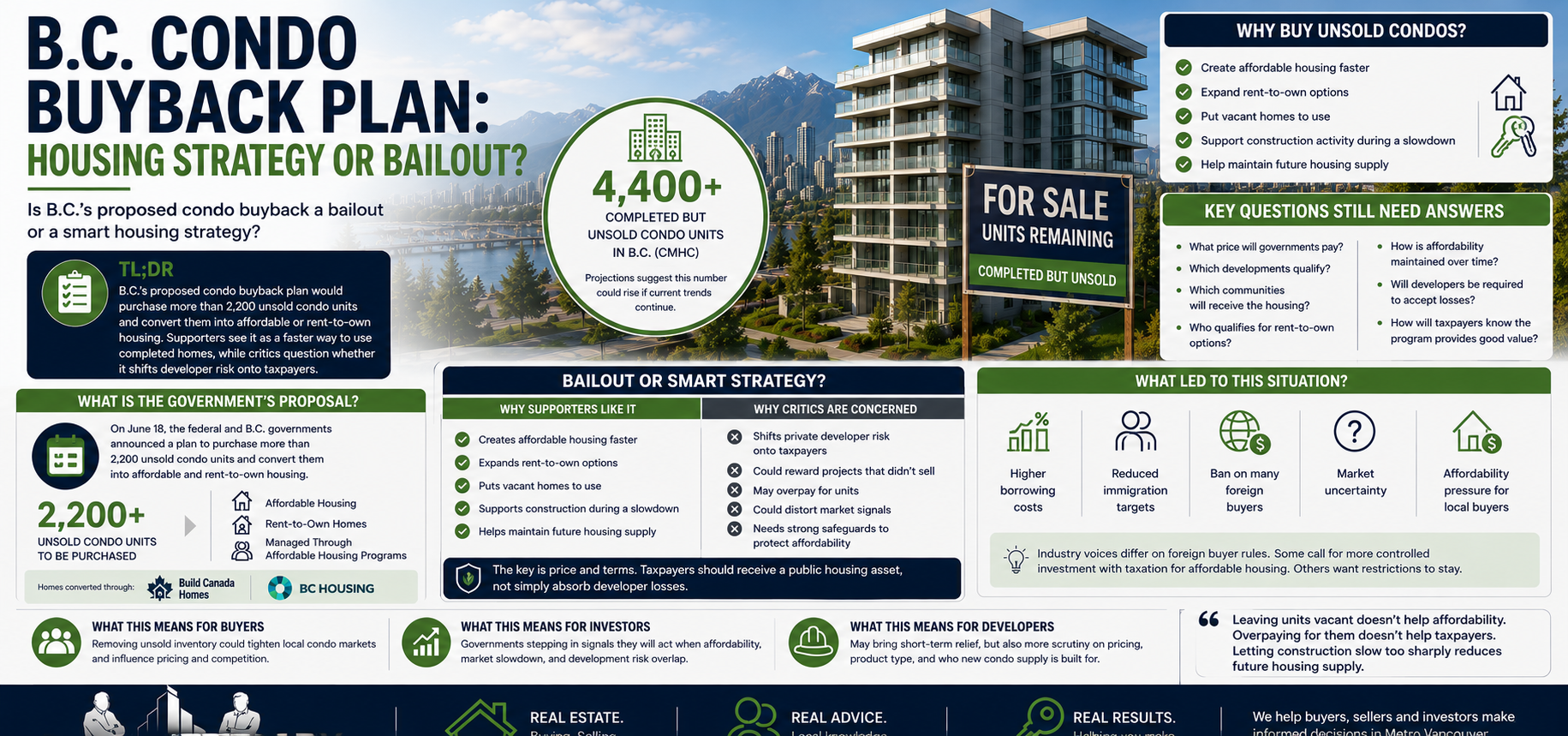
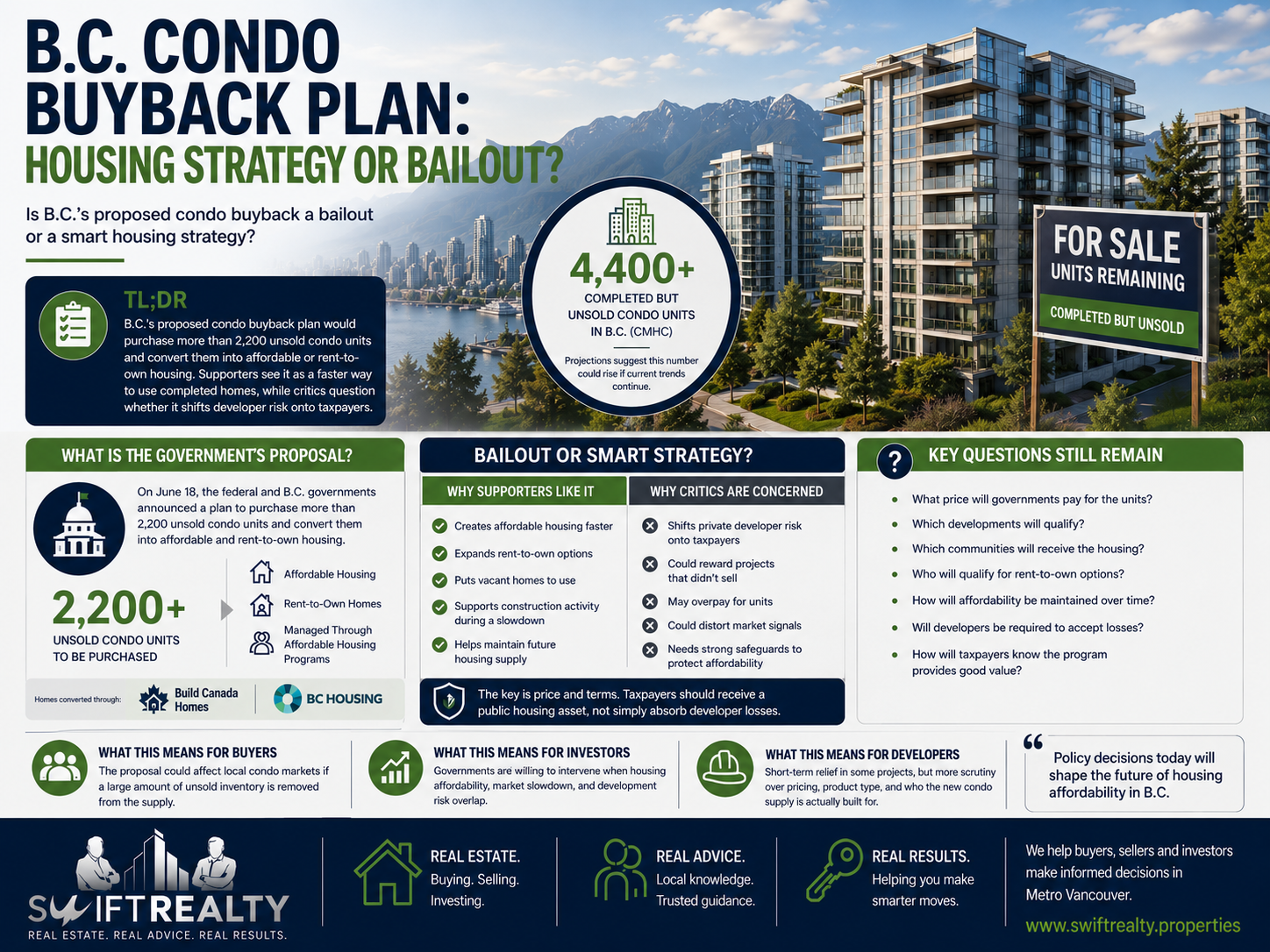
TL;DR: B.C.'s proposed condo buyback plan would purchase more than 2,200 unsold condo units and convert them into affordable or rent-to-own housing. Supporters see it as a faster way to use completed homes, while critics question whether it shifts developer risk onto taxpayers.
British Columbia's housing market is facing a growing inventory of unsold condominiums.
According to the brief, CMHC data shows about 4,400 completed but unsold condo units in B.C., with projections suggesting that number could rise if current trends continue. In response, the federal and B.C. governments announced on June 18 a proposal to purchase more than 2,200 unsold units and convert them into affordable and rent-to-own housing.
The proposal has sparked a major debate: is it a taxpayer-funded developer bailout or a practical way to address housing affordability and a slowing condo market?
A Growing Supply Of Unsold Condos
Canada's housing market has changed over the past two years.
Higher interest rates, slower sales, reduced immigration targets, and restrictions on foreign buyers have all contributed to weaker demand for new condominiums.
In Metro Vancouver, completed but unsold condo inventory has become a bigger concern. Daily Hive reported that CMHC data showed 4,376 completed but unabsorbed condo apartments in Metro Vancouver in May 2026, up from 2,488 one year earlier.
This creates challenges not only for developers, but also for lenders, contractors, suppliers, and future housing construction.
What Is The Government's Proposal?
On June 18, the federal government and the Province of British Columbia announced a housing initiative that includes the proposed purchase of more than 2,200 unsold condominium units.
The plan would convert these homes into:
- Affordable housing
- Rent-to-own homes
- Housing managed through affordable housing programs
The announcement says the homes would be converted through Build Canada Homes and BC Housing. Business in Vancouver described the plan as part of a wider package that also includes major infrastructure and housing support.
At this stage, several details remain unclear, including eligibility criteria, pricing, locations, and implementation.
Why Buy Unsold Condos?
The main argument is speed.
Building new affordable housing can take years. Buying completed units could create affordable housing faster than waiting for land acquisition, rezoning, permitting, construction, and completion.
Supporters argue the proposal could:
- Increase affordable housing supply more quickly
- Expand rent-to-own options
- Put vacant homes to use
- Support construction activity during a slowdown
- Help maintain future housing supply
The idea is that keeping the development industry stable today may help prevent deeper supply shortages later.
Is This A Developer Bailout?
This is where opinions differ.
Critics argue that buying unsold condos could shift private developer risk onto taxpayers. If developers built units they cannot sell, some question whether public money should be used to absorb that inventory.
Supporters argue that the answer depends on price and terms. If governments purchase units at below-market prices and convert them into affordable homes, taxpayers may receive a public housing asset rather than simply funding developers.
The real issue is whether the government pays a fair price, how affordability is protected, and whether developers are expected to absorb some of the market loss.
What Led To This Situation?
Several factors have reduced condo demand in recent years, including:
- Higher borrowing costs
- Reduced immigration targets
- The federal ban on purchases by many foreign buyers
- Market uncertainty
- Affordability pressure for local buyers
Some industry participants have questioned whether more controlled foreign investment, paired with taxation for affordable housing, could help stimulate new construction without requiring direct government purchases.
Others believe foreign buyer restrictions should remain in place to protect affordability for Canadian residents.
There is no simple consensus.
What Questions Still Need Answers?
The proposal has generated discussion because the key details are not yet clear.
Important questions include:
- What price will governments pay for the units?
- Which developments will qualify?
- Which communities will receive the housing?
- Who will qualify for rent-to-own options?
- How will affordability be maintained over time?
- Will developers be required to accept losses?
- How will taxpayers know the program provides good value?
Until these details are released, it is too early to say whether the program is mainly a market intervention, an affordable housing strategy, or both.
What This Could Mean For Buyers And Investors
For buyers, the proposal could affect local condo markets if a large amount of unsold inventory is removed from the supply.
For investors, the bigger signal is that governments are willing to intervene when housing affordability, market slowdown, and development risk overlap.
For developers, the program may create short-term relief in some projects, but it may also bring more scrutiny over pricing, product type, and who the new condo supply is actually built for.
What This Means For The B.C. Housing Market
One thing is clear: thousands of completed homes sitting unsold creates a difficult policy problem.
Leaving units vacant does not help affordability. Overpaying for them does not help taxpayers. Letting construction slow too sharply could also reduce future housing supply.
The success of this proposal will depend on the final structure, pricing, transparency, and long-term affordability rules.
If you are buying, selling, or investing in Metro Vancouver real estate, Swift Realty can help you think through how policy shifts, condo supply, and local market conditions may affect your next move.

Responses